Innocence and becoming a killer
The Knife of Never Letting GoInnocence and becoming a killer names the moral struggle at the heart of Todd Hewitt’s flight: whether he can remain someone who refuses to kill when the people pursuing him appear to make that refusal a danger to everyone around him. Viola sees his innocence not as weakness but as the quality that threatens the order Mayor Prentiss is trying to impose. Todd, however, measures his refusal against the losses he fears it has caused, and resolves that he may have to become a killer. The concept’s force comes from the gap between those interpretations—and from the moment that turns his decision into a fact he cannot simply put aside.
Innocence as protection and danger
When Viola reads the directions to Farbranch, she explains that Todd’s innocence is his best chance of being welcomed there. She also warns that there is a history he does not know, and that knowing it could put him in danger. Her account connects his personal innocence to a larger political threat: Prentisstown is moving, and its plan has waited for the last boy there to become a man. His approaching adulthood is therefore not merely a private milestone. It is tied to a plan whose consequences reach beyond the settlement and make the wider world something that must be warned.
Innocence carries a practical risk as well as moral significance. Todd is being pursued across towns and open country, and he initially interprets that pursuit as proof that he does not fit. Viola reverses the meaning of the chase: in her view, the army is not simply trying to eliminate an outsider but to make him into the kind of man it wants. She argues that if it can extinguish the part of him that will not kill, it can demonstrate that the same transformation can be forced on anyone. His difference thus becomes both the reason he is in danger and the point on which resistance depends.
The pressure to prove manhood
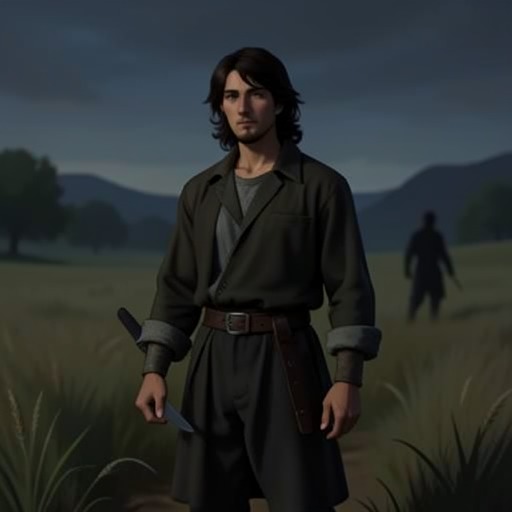
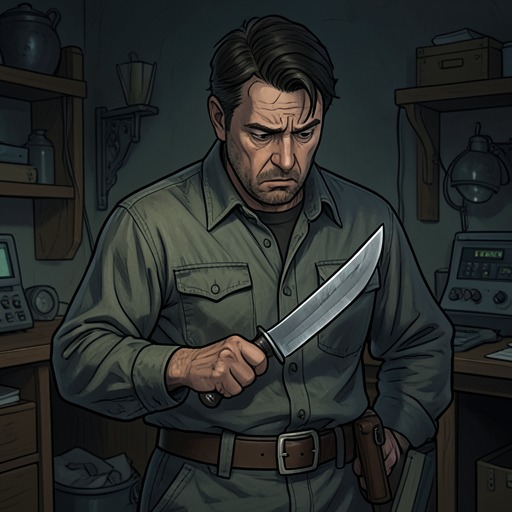
The conflict sharpens when Mr Prentiss Jr invokes his father’s saying about a knife and its wielder, then characterizes Todd as a fighter who is not a killer. The taunt touches an existing wound: Todd recognizes that he has heard the same words from Aaron. Because Noise makes his response perceptible, Todd knows that Mr Prentiss Jr can tell that the remark has reached him. The exchange is not only a challenge about what Todd might do with a weapon; it presses on a judgment already shaping his sense of himself.
Todd answers with a threat to kill Mr Prentiss Jr, but his anger does not resolve the question of what kind of person he is. When Viola points to his actions—helping her, rescuing her from Aaron, leaving the swamp with her, standing up for her in the orchard, and leaving Farbranch with her—she reads their shared story differently from him. Todd sees the flight as a consequence of his own failure. Viola instead asks why an entire army is pursuing him so relentlessly, and concludes that its objective is to make him a killer. His resistance, she insists, is not a detour from defeating the pursuers: it is how he can defeat them without becoming what they want.
Loss turns refusal into self-accusation
Viola’s argument meets Todd’s belief that Mayor Prentiss killed Ben and Cillian. She questions whether that claim is true, noting that Todd has accepted what Mr Prentiss Jr said; but doubt does not undo Todd’s grief or his sense of responsibility. He wonders whether killing Aaron earlier could have prevented Aaron from telling the Mayor where he had seen him. He also imagines that killing Mr Prentiss Jr at the farm could have prevented him from leading the Mayor’s men to Ben and Cillian, and from harming Manchee. These are counterfactuals, not established alternatives, but Todd treats them as evidence against his own restraint.
The thought changes his definition of what it would take to become a man. Though Viola argues that he can defeat the army by refusing its transformation, Todd believes that his inability to kill must change if he is to hold his head up. The conflict is therefore not simply between a peaceful boy and violent pursuers. It is between two accounts of responsibility: Viola sees preserving his refusal as a way to resist the pursuers’ purpose, while Todd fears that refusing to kill has left other people exposed to harm. His emerging resolve grows out of that fear, not out of any demonstrated acceptance of the army’s values.
The approaching birthday sharpens the pressure. At midnight, Todd counts himself twenty-five days from becoming a man, and he turns his regret into a declaration that he will be a killer if that is what it takes. The countdown gives the argument a deadline: manhood is imminent in the social world around him, while his own understanding of manhood has become entangled with the power to prevent future losses. The declaration follows his repeated reasoning about who might have been spared had he killed sooner. It is a decision formed under grief and uncertainty, not a settled proof that Viola’s reading of the pursuit is wrong.
The declaration and its consequence
After the declaration, Todd and Viola continue through roughening terrain beside the river. They stop beneath a rocky outcropping and eat what remains of their food, much of which was ruined in the fight with Mr Prentiss Jr. When they round another outcropping, they encounter a campsite: a fire, fish cooking on a spit, and a man scaling another fish. The quiet, ordinary details of the scene precede a decisive change in Todd’s understanding of himself.
After the encounter, Todd repeatedly identifies himself as a killer. The repetition is accompanied by fear and a collapse into distress; he cannot stand, and the scene’s aftermath remains present to him even as rain falls. The passage does not make this recognition feel like a triumphant arrival at adulthood. Instead, the word returns as an accusation and a shock. Todd has crossed the line he had been arguing over, but the recognition brings no simple assurance that he has become stronger or more capable of protecting others.
The concept’s significance
The sequence makes innocence more complicated than mere inexperience. It is a moral refusal that Viola regards as politically consequential, because Mayor Prentiss’s project depends on changing Todd into someone who will kill. At the same time, Todd experiences that refusal through specific, painful possibilities: he cannot know whether earlier violence would have prevented later harm, but he keeps imagining that it might have. The difference between what he knows and what he blames himself for becomes a source of pressure.
The recurring language of becoming a man and becoming a killer brings the story’s coming-of-age test into direct conflict with Todd’s moral identity. First, another pursuer uses the distinction between fighter and killer to provoke him; then Todd adopts killing as a possible requirement of manhood; finally, the campsite encounter makes him understand himself as having crossed that boundary. The movement does not settle whether violence can protect the people he loves or vindicate his choices. It establishes instead that the demand to become a killer is precisely the struggle in which his innocence—and the meaning of his adulthood—is at stake.